

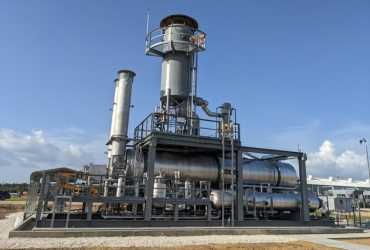

Oily Wastwater Treatment
Crescent Engineering offers advanced oily wastewater treatment solutions designed to effectively separate hydrocarbons, suspended solids, and other contaminants from water streams. Whether from oil and gas production, petrochemical processing, or industrial cleaning operations, oily wastewater poses complex environmental and operational challenges.
Our systems utilise proven technologies — including API and CPI separators.
Each solution is tailored to the specific composition of the wastewater and the performance requirements of the application, delivering reliable separation, low maintenance, and long-term operating efficiency.

We offer several options for total process plants
In today’s industrial landscape, a wide range of operations — including oil and gas production, petrochemical refining, manufacturing, and metalworking — generate significant volumes of oily wastewater as a by-product of their processes. This wastewater can have serious environmental and health consequences if not adequately treated.
Oily wastewater typically contains a complex mixture of hydrocarbons, suspended solids, heavy metals, and emulsified oils. When discharged untreated or improperly managed, it can contaminate surface and groundwater sources, degrade aquatic ecosystems, and threaten drinking water supply. Prolonged exposure or accidental ingestion can also affect human health, leading to both short- and long-term issues.
Beyond environmental impact, oily wastewater can damage infrastructure, reduce equipment lifespan, and lead to non-compliance with local and international discharge regulations, resulting in legal and financial consequences.
Effective treatment is therefore essential — not only to protect natural resources and public health but also to support sustainable operations and demonstrate environmental responsibility.
CPI Separators
CPI separators in steel tanks can be designed for above or below grade installation. Our sepa-rators are individually designed and can be applied for a wide variety of treatment problems at atmospheric pressure such as:
-
Deballast water
-
Oil surface drain water
-
Refinery effluent
-
Process water
-
Desalter effluent
-
Produced water
-
Cooling water
Process Description
The oily water enters the separator through a specially designed slotted cross pipe, which distributes the flow across the width of the separator tank. Due to the sudden decrease in flow velocity, a certain amount of solids that may be contained in the liquid will settle in the entrance compartment. Depending on the solids concentration, a sludge suction device may be included in the design for the intermittent removal of accumulated solids.
The oily water continues on its way over the bottom baffle and enters the plate pack from below. In the laminar flow in each channel (i.e. the distance between two subsequent plates), the minute oil droplets rise by virtue of the fact that their density is lower than that of the carrier medium and attach themselves to the underside of the upper plate.
The oil film that is thus constantly being formed at the underside of each plate creeps slowly upwards along the plates.
The oil film is assisted in its upward movement by the concurrent laminar flow.


