

Walnut Shell Filters for Produced Water Polishing and Reinjection

Contents
Direct answer
Walnut shell filters are deep-bed media filters used to remove residual oil and suspended solids after primary produced-water treatment. They are particularly relevant where a reinjection system needs stable particulate and oil control, but selection must reflect the actual contaminant load and backwash strategy.
A successful package balances filtration velocity, media depth, pressure drop, run length, backwash effectiveness, reject volume and redundancy. The design target should be tied to injection-water quality and reservoir protection rather than a generic outlet claim.
The role of polishing filtration
Hydrocyclones and flotation remove most dispersed oil, but fine droplets, floc and solids can remain. A walnut shell filter captures this residual load through a resilient, oleophilic granular bed before water reaches injection pumps or another sensitive process.
It should not compensate indefinitely for weak upstream deoiling. Excess loading shortens filter runs, increases backwash frequency and raises reject volumes.
Feed data required for filter selection
Provide minimum, normal and maximum flow, oil-in-water concentration, suspended solids, particle-size distribution, temperature, salinity and chemical programme. Variability matters because a filter selected on an average feed may overload during separator upset or well intervention.
The outlet specification should identify measurement methods and whether limits apply continuously or as averages. For reinjection, formation sensitivity, injectivity history and compatibility work may impose further targets.
Media loading and pressure drop
Filtration rate and bed depth determine how much contaminant is retained before differential pressure or outlet quality triggers cleaning. Vessel distribution must avoid high-velocity zones and channel formation.
Instrumentation should track inlet, outlet and differential pressure. Parallel trains allow one unit to backwash while treatment continues.
Define clean-bed and terminal differential pressure
State maximum oil and solids loading
Confirm online capacity during backwash
Provide access for media inspection and replacement
Backwash and media regeneration
Backwash is central to the process. The sequence must loosen the bed, remove accumulated oil and solids and restore distribution without excessive media loss.
Quantify backwash-water source, pumps, air or gas requirements, duration, frequency and the destination of dirty backwash. This reject can materially affect upstream capacity and the site water balance.
Integration with reinjection systems
The filter outlet may feed deoxygenation, biocide dosing and high-pressure pumps. Controls should coordinate with storage levels and injection demand so backwash does not starve pump suction or cause untreated bypass.
Materials must suit chloride, temperature, sour-service and chemical conditions. Oxygen ingress, stagnant branches and unsuitable elastomers can undermine corrosion and microbiological control.
How to specify the package
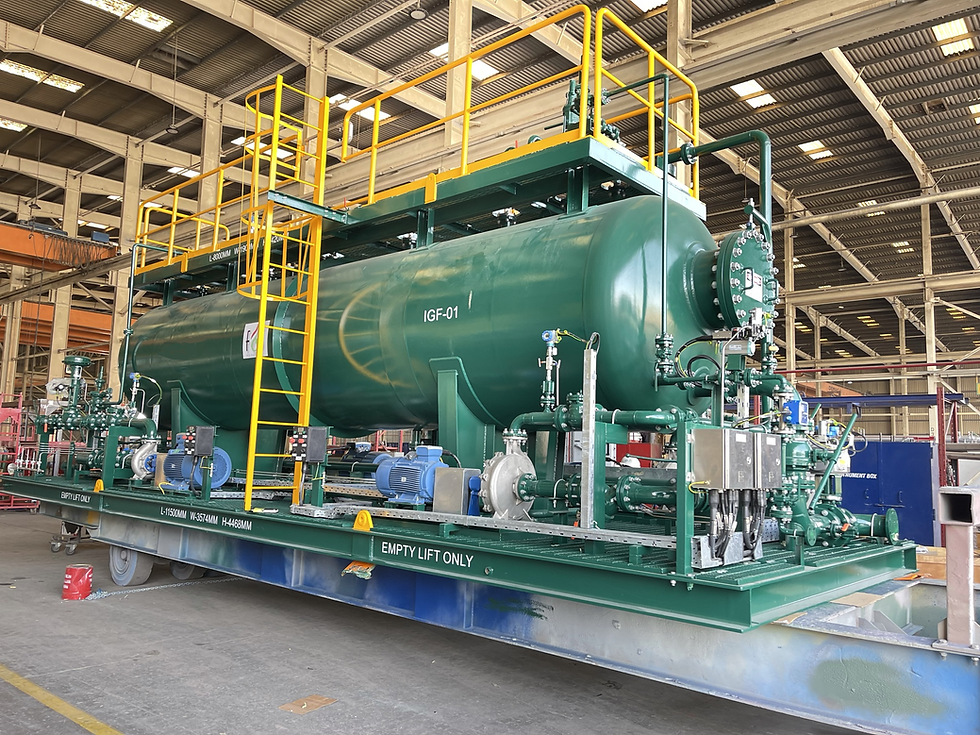
Define vessels, media charge, backwash pumps, strainers, air system, piping, valves, instruments, control logic, sample points and reject routing. Include codes, hazardous-area classification and documentation.
FAT should verify construction, valve sequencing, controls, alarms and simulated modes. Commissioning must establish initial differential pressure, backwash settings and the sampling baseline.
Proof to add before publication
Add certified media information, a typical filtration and backwash sequence, and verified inlet/outlet results from comparable service. State particle and oil test methods so performance can be assessed consistently.
Crescent Engineering can configure walnut shell filtration as part of a produced-water polishing or reinjection package. Send your flow envelope, feed analysis and injection-water targets for a technical review.
References
Related Crescent articles
Continue exploring this topic:

Comments