

Produced Water Treatment Troubleshooting: Causes of High Oil-in-Water

Contents
Direct answer
High oil-in-water at a treatment outlet is usually a symptom, not a diagnosis. The cause may be a changed well-fluid composition, separator carry-over, excessive shear, chemical incompatibility, overloaded hydrocyclones, unstable flotation, saturated filters or a sampling and analysis error.
Troubleshooting should move from data validation to process localisation, then to equipment checks. Changing several settings or chemicals at once destroys the evidence needed to identify the real mechanism.
First confirm that the result is real
Check sample location, flushing, container, preservation, transport time and laboratory method. Portable analysers and laboratory extraction methods may report differently, so trends need a consistent basis.
Take duplicate samples where appropriate and compare upstream and downstream points at the same time. Record flow, temperature, pressure and chemical dose with each sample.
Look for a change in the incoming water
New wells, workovers, separator conditions and production chemicals can alter oil concentration, droplet size, solids and emulsion stability. A treatment train may be healthy but receiving a feed outside its design basis.
Compare current analysis with the original design envelope and recent stable operation. Interview operations staff because a timing change can reveal a link that historian averages conceal.
Check primary separation and shear
Poor vessel level control, damaged internals or excessive throughput can send free oil downstream. Pumps and throttling valves may then break that oil into droplets that are harder to remove.
Inspect upstream pressure drops, control-valve position and pump operation. Correct the source of carry-over before increasing downstream chemical dose.
Diagnose each treatment stage
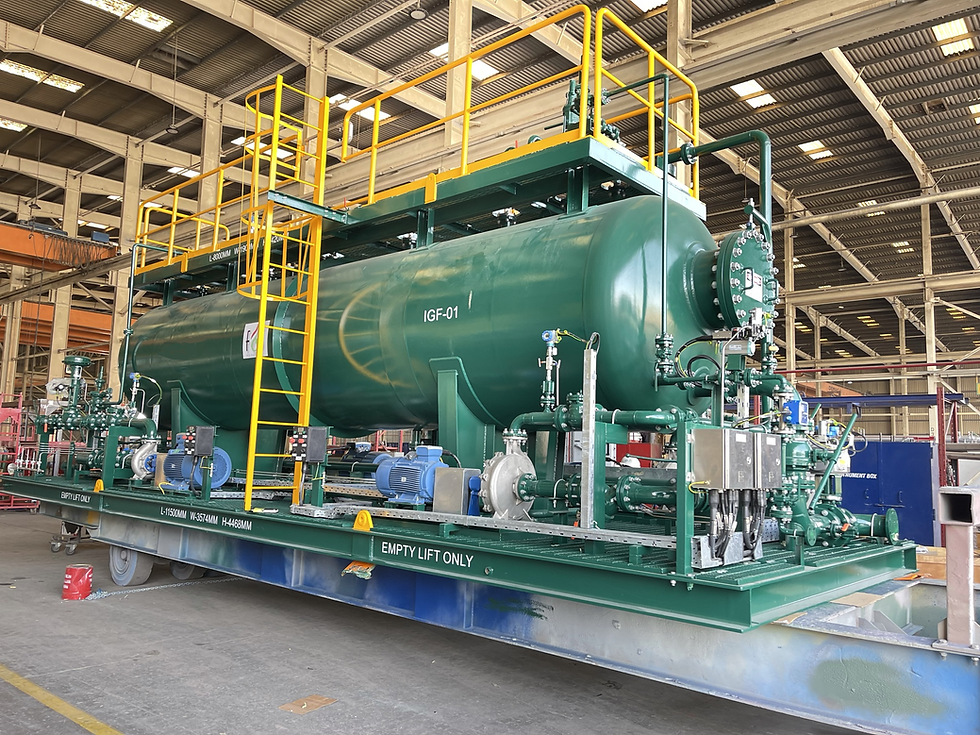
For hydrocyclones, verify three pressures, active liner count, reject flow and signs of blockage or erosion. For IGF, inspect gas dispersion, recirculation, level, froth removal and sludge accumulation.
For polishing filters, trend differential pressure, run length, outlet breakthrough and backwash completion. Samples around each stage show where performance is being lost.
Validate instruments before adjusting controls
Use simultaneous stage-by-stage samples
Change one variable at a time
Document the response and restore safe settings
Review chemical interactions
A changed demulsifier, corrosion inhibitor, scale inhibitor or flotation aid can affect droplet coalescence and surface chemistry. More chemical is not automatically better.
Confirm injection location, pump calibration, concentration and mixing time. Bottle or flotation tests using representative water can narrow a dosing range before a controlled plant trial.
Create a durable corrective-action plan
Separate immediate containment from the root-cause fix. Temporary flow reduction or diversion may control risk while instruments, equipment or chemistry are corrected.
Close the investigation with evidence, ownership and monitoring thresholds. Update the operating window and response procedure so recurrence is identified earlier.
Proof to add before publication
Add an anonymised troubleshooting example with a time-aligned trend, stage-by-stage sample results and the verified root cause. Remove claims that cannot be supported by records.
Crescent Engineering can conduct a structured produced-water performance review. Send your process flow diagram, recent trends, laboratory results and operating history to arrange a troubleshooting assessment.
References
Related Crescent articles
Continue exploring this topic:
Comments