

Offshore Produced Water Treatment Packages: Footprint, Weight and Maintainability

Contents
Direct answer
An offshore produced water treatment package must meet the required outlet quality without creating an unacceptable burden on deck space, structural load, utilities or maintenance. The best design is therefore not simply the smallest skid. It is the arrangement that remains operable across the real feed envelope, can be safely maintained in limited space and reaches the platform in a form that can be installed and commissioned with minimal disruption.
Procurement should compare operating weight, lifted weight, footprint, height, centre of gravity, access envelopes, module split, utility demand, turndown and maintainability alongside treatment performance. These criteria need to be fixed early because a late change to equipment layout, vessel size or maintenance route can affect structural steel, lifting studies, piping and shutdown planning.
Start with the offshore design basis
Offshore constraints should change the package design from the first process calculation. A credible basis includes normal, minimum and peak water flow; oil-in-water concentration and droplet-size distribution; temperature, pressure, gas content, solids, salinity and corrosive species; required outlet quality; disposal or reinjection route; and the expected production profile. A single design-point flow is not enough.
The supplier also needs platform-specific information: available plot area, deck loading, module support points, crane capacity, laydown space, escape routes, hazardous-area classification, ambient conditions, utilities and tie-in locations. Brownfield projects require laser scans or verified dimensions because legacy drawings may not reflect the installed plant.
Process selection follows this combined envelope. Deoiling hydrocyclones can offer high throughput in a compact form when differential pressure and droplet size are suitable. Gas flotation provides another separation step where finer droplets or variable feed must be managed. Filters may be required for polishing or reinjection duty. Degassing, solids handling and chemical conditioning can become essential when the water composition or disposal route demands them.
Control footprint and operating weight
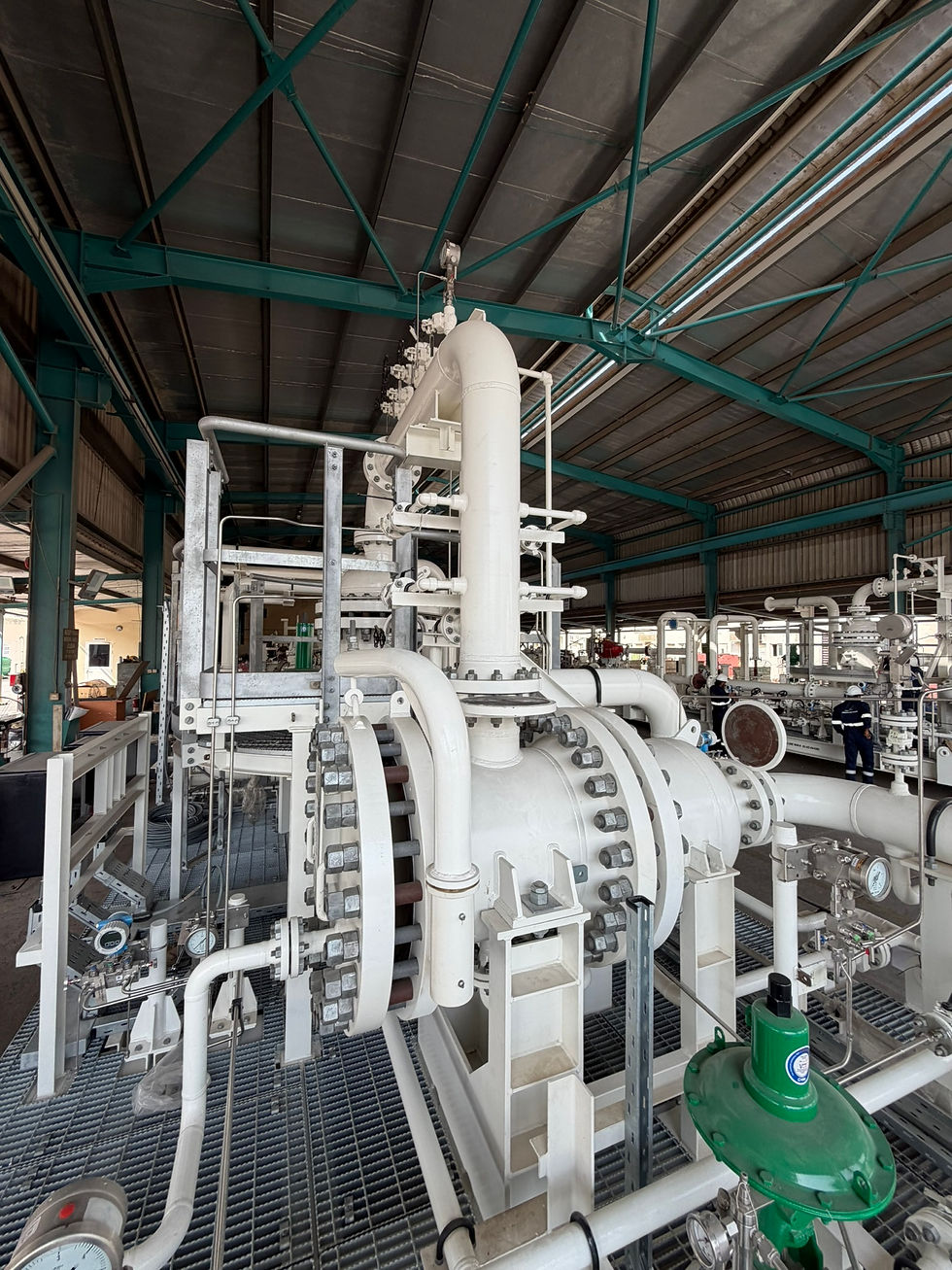
Footprint should be stated with access included. A compact general arrangement that cannot accommodate filter-media removal, hydrocyclone-liner withdrawal, instrument calibration or valve operation is not a maintainable design. Tender drawings should distinguish the permanent equipment boundary from temporary maintenance and lifting zones.
Weight data should separate dry, operating, test and maximum flooded conditions. The schedule should identify each removable item, the heaviest maintenance lift and the centre of gravity for every transportable module. Vessel inventories, pipework hold-up, filter media, insulation and local steelwork can make operating weight materially higher than the early estimate.
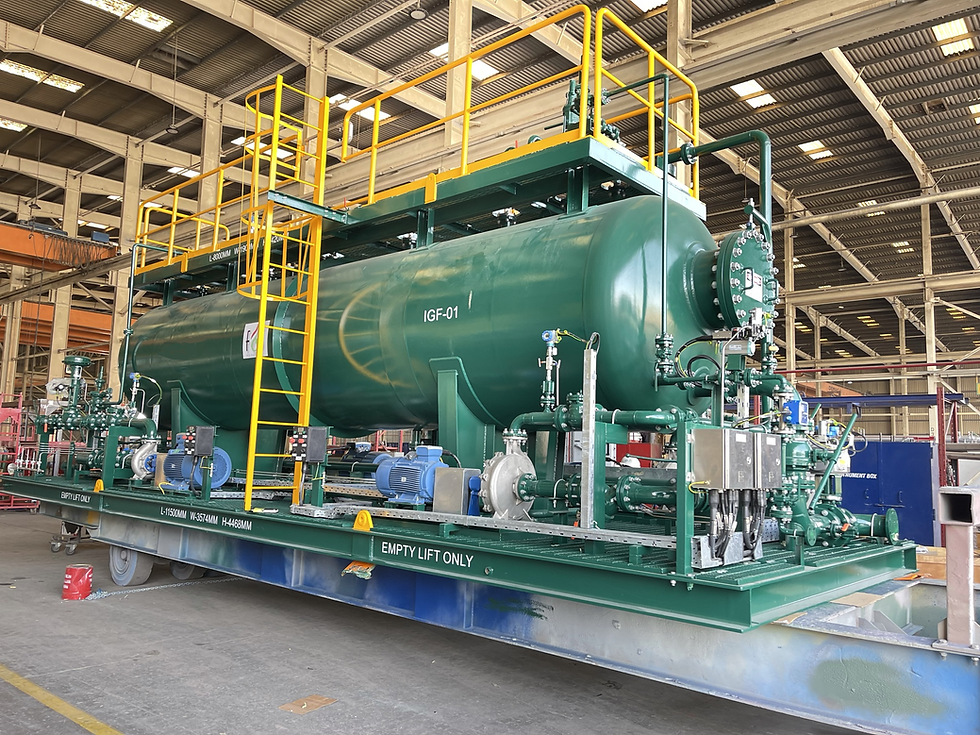
Reducing weight by removing access platforms or simplifying supports can transfer cost and risk to offshore operations. Better options include using compact separation equipment where the feed supports it, arranging vessels to share access, minimising unnecessary liquid inventory, locating heavy items close to support points and splitting the package into modules that match the installation crane and route.
Design for turndown and changing water rates
Produced water rate and composition change through field life. An offshore package should therefore be checked at start-up, normal production, peak water cut and late-life conditions. Low flow can be as challenging as peak flow: hydrocyclones may lose the pressure relationship needed for separation, flotation recirculation may become disproportionate and chemical residence time may change.
Practical turndown measures include multiple hydrocyclone liner banks, staged equipment, variable-speed pumps, selectable flotation cells and control logic that keeps the active equipment within its stable operating range. The philosophy should explain what happens when one train is unavailable and whether reduced production, temporary off-spec storage or full N+1 capacity is required.
Redundancy should be risk-based. Duplicating every item increases weight, footprint and control complexity. Critical single-point failures can instead be addressed through duty/standby rotating equipment, spare instrument channels, installed bypasses where safe, rapid-change internals and an agreed stock of offshore spares.
Make maintenance access part of the process design
Maintainability needs to be reviewed using real tasks, not a generic clearance note. The team should walk through isolation, draining, gas freeing, opening, removal, transfer and reinstatement for each component. The review must consider the person performing the task, tools, temporary lifting equipment and the route to the workshop or laydown area.
Hydrocyclone liners require straight withdrawal space and a safe way to manage residual liquid. Filters need room for baskets, cartridges or media. Pumps need coupling and seal access. Analysers need representative samples, flushing and calibration facilities in a location operators can reach without entering an avoidable exposure zone.
Good designs provide positive isolation, drains routed to a suitable closed system, vents to an approved destination, local gauges for diagnosis, lifting points certified for their intended loads and removable panels that can actually be handled offshore. These details reduce task duration and the temptation to improvise.
Define interfaces, safety and utilities
Battery limits should state flange rating, facing, metallurgy, design pressure and temperature, allowable loads, tie-in ownership and the condition expected at every inlet and outlet. Electrical loads, instrument air, service water, chemicals, drains, vents and communications should be quantified for normal and peak operation.
Where hydrogen sulphide or hydrocarbon gas may be released, the design must address enclosed volume, ventilation, detection, vent routing, ignition control and materials suitability. Depressurisation and draining sequences should be covered in operating and maintenance procedures. Chemical storage and injection points need containment, compatibility checks and safe replenishment routes.
Controls should integrate with the platform philosophy while preserving essential local functions. Clearly defined cause-and-effect, alarm priorities, permissives, shutdown actions and communications mapping reduce commissioning problems. Operators should be able to see both treatment quality and the conditions that explain it, such as pressure ratio, reject flow, gas rate and filter differential pressure.
Compare supplier proposals on equal terms
A bid comparison can be misleading if one supplier quotes only the process skid while another includes access steel, local control panels, interconnecting pipework and commissioning spares. Issue a common scope matrix and require each bidder to list inclusions, exclusions, assumptions and deviations against it.
Compare guaranteed outlet quality across the same feed envelope.
Use operating and flooded weight, not only shipping weight.
Record permanent footprint plus maintenance and lifting envelopes.
Compare utility consumption at normal, peak and turndown cases.
Check module dimensions against transport, crane and installation routes.
Assess inspection, preservation, offshore commissioning and spares as part of total delivery risk.
Lifecycle value includes lost-production exposure, offshore labour, consumables, chemical use, energy and the probability of needing later modification. A slightly larger, well-arranged module can cost less over its service life than a tightly packed package that is difficult to operate or repair.
Evidence to request before purchase
Before award, request a general arrangement showing maintenance envelopes, a weight and centre-of-gravity schedule, the process design basis, equipment sizing calculations, hydraulic profile, utility summary, materials-selection basis and a preliminary control narrative. A three-dimensional review or verified layout model is especially useful for brownfield work.
Performance evidence should match the proposed technology and duty. Ask for relevant reference installations, test data, recognised calculation methods and a clear statement of guarantee conditions. The factory acceptance test should prove the controls, alarms and cause-and-effect logic; it does not replace process-performance evidence under representative water conditions.
Crescent Engineering can review the design basis and develop a packaged offshore treatment concept around the available space, weight, utilities and maintenance routes. Share the feed-water data, outlet requirement, plot information and platform constraints to discuss an offshore package.
References
Crescent Engineering FZE, water-treatment engineering and packaged systems.
US Environmental Protection Agency, Oil and Gas Extraction Effluent Guidelines.
US Department of Energy, National Energy Technology Laboratory, Produced Water Treatment Catalog and Decision Tool.
Association for Materials Protection and Performance, oil and gas corrosion reference library.
Related Crescent articles
Continue exploring this topic:

Comments