

Skid-Mounted Produced Water Treatment Systems for Offshore and Onshore Projects

Contents
Direct answer
A skid-mounted produced water treatment system offers the best project outcome when it can move engineering, fabrication and testing away from site while keeping transport, lifting, maintenance and integration practical. The decision should be based on the complete installed module, not simply the footprint of the main vessel.
Offshore and onshore projects share the benefits of controlled fabrication and factory testing, but their constraints differ. Offshore work is usually dominated by weight, deck loading, lifting, hazardous areas and access. Onshore work gives more space but can be constrained by road transport, civil works, remote logistics and short shutdowns.
Start with the installation strategy
The project team should decide whether the treatment plant will be delivered as one skid, several transportable modules or equipment assembled at site. That choice affects piping breaks, structural steel, cable interfaces, testing scope and commissioning time.
A single large skid reduces field connections but can exceed crane, vessel, road or deck limits. Several smaller skids are easier to move, yet require more site tie-ins and a stronger interface plan. The optimum arrangement follows the logistics and outage strategy rather than a standard package catalogue.
Footprint, weight and centre of gravity
Plot area must include operating access, escape routes, valve reach, instrument removal and maintenance laydown. The equipment outline alone is not a usable footprint. Provide operating, dry, test and shipping weights, plus centre-of-gravity data for each transport condition.
Offshore designs need deck loading and dynamic lifting checks. Onshore designs need foundation loads, anchor arrangements and transport axle limits. Future replacement of heavy items should be possible without dismantling unrelated equipment.
Designing for offshore service
Offshore modules may face salt-laden air, vibration, motion, strict hazardous-area controls and restricted personnel access. Materials, coatings, enclosure ratings and cable systems should reflect the site standard. Drainage and vent routing need particular attention because releases cannot be treated as ordinary open-plot drainage.
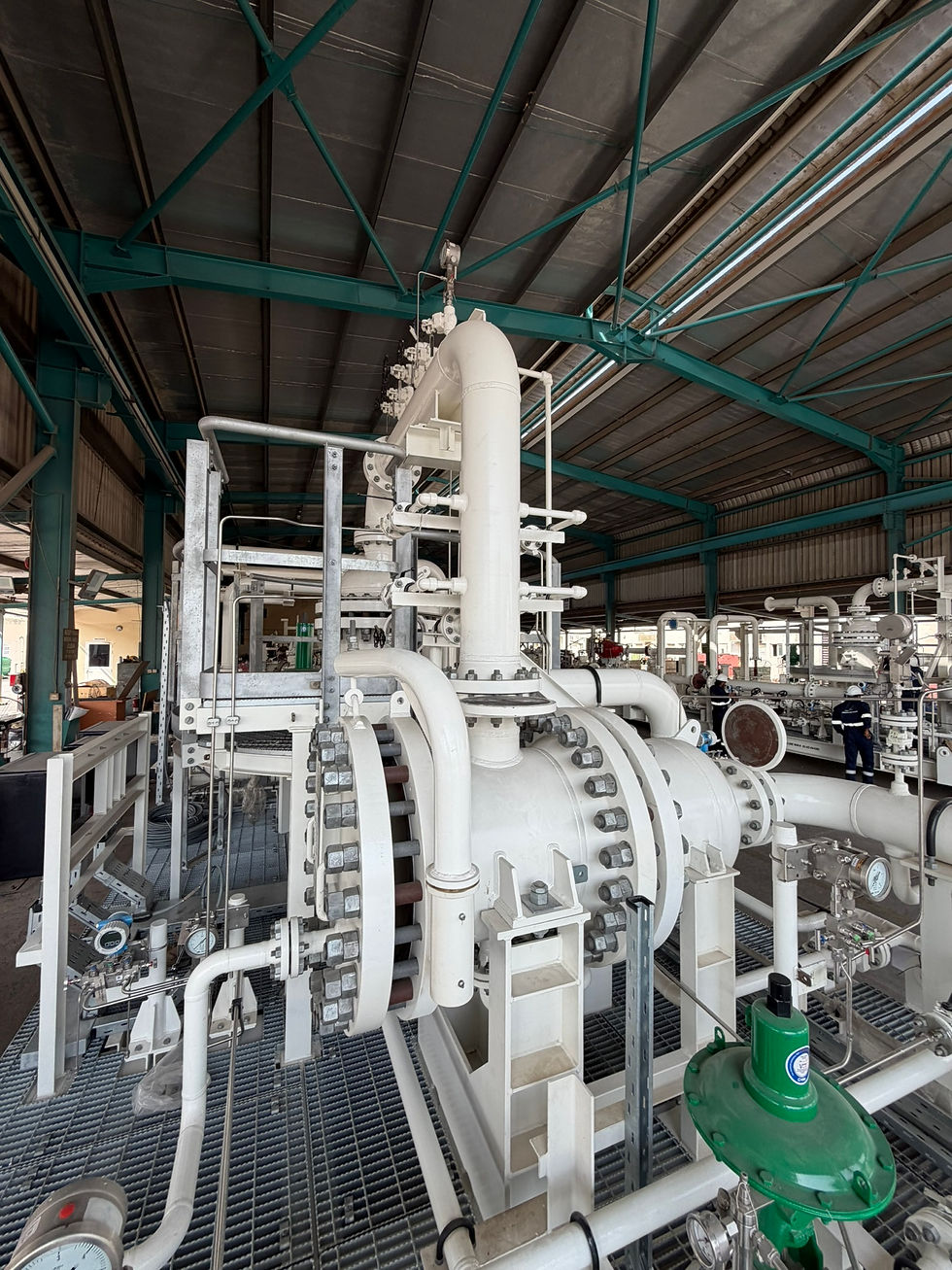
Maintainability is often more valuable than shaving the last square metre from the skid. Hydrocyclone liners, pumps, flotation internals and instruments require safe withdrawal paths. Isolation and bypass arrangements should support planned maintenance without creating uncontrolled discharge risk.
Designing for onshore service
Onshore packages can use wider maintenance zones and separate utility skids, but the environment may introduce extreme temperature, dust, solar loading and remote-service constraints. Equipment duty, instrument shelters and electrical cooling should match the site climate.
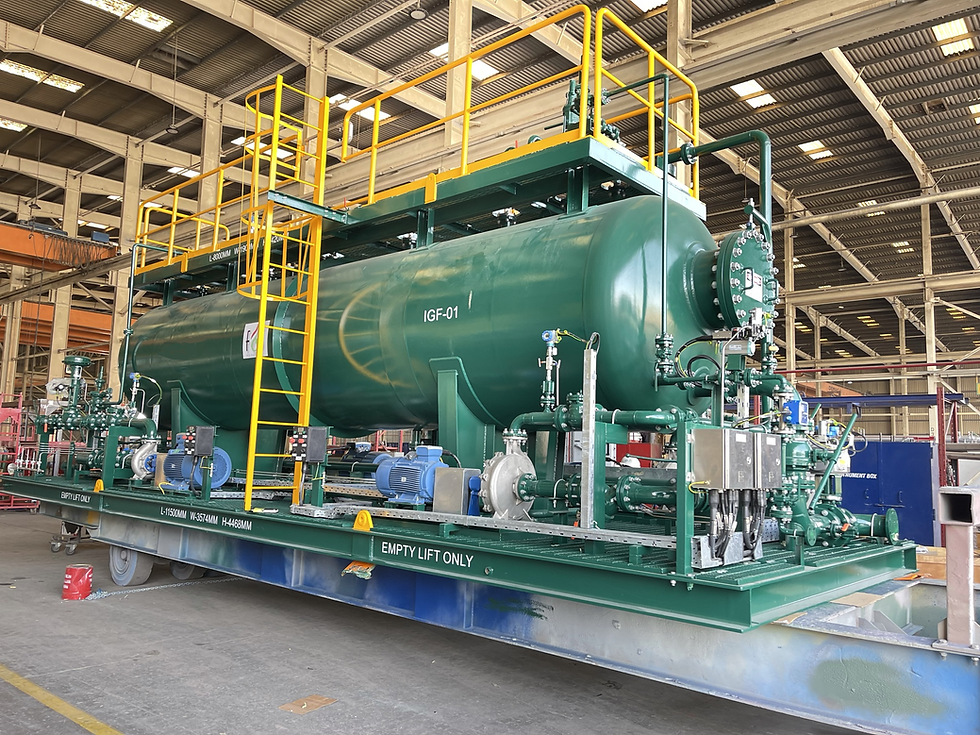
Road dimensions, bridge limits, border procedures and final-mile access determine the shipping split. A package fabricated in the UAE can be trial assembled and factory tested before dispatch, while transport frames and lifting plans are incorporated into the design.
Factory fabrication and quality control
Skid construction brings piping, equipment, instruments and controls into a controlled workshop. This supports material traceability, welding inspection, dimensional checks, coating control and early resolution of clashes. It also gives the client a clear point for inspection before the module reaches site.
Quality records should follow the approved inspection and test plan. The manufacturing record book should connect certificates, weld maps, non-destructive examination, pressure tests, calibration records and punch-list closure to the delivered skid.
What FAT can and cannot prove
Factory acceptance testing can demonstrate control logic, alarms, communication, valve actions, pump operation where suitable test facilities exist and the sequence of automatic backwash or chemical dosing. It can verify that interfaces are ready and documented.
FAT does not automatically prove process performance on the future produced water. Performance acceptance requires representative feed, defined inlet conditions, stable operation and agreed sampling. The contract should separate mechanical, functional and process tests.
Site integration and commissioning
The site team needs an interface register covering process flanges, utilities, power, signals, drains, vents, structures and earthing. Each interface should have an owner and completion date. A module can be mechanically complete yet remain unavailable because a small utility or control dependency was missed.
Commissioning should progress from preservation release and mechanical checks to energisation, loop checks, water runs and process introduction. Startup spares, chemicals, flushing media, waste handling and operator training should be planned before mobilisation.
When a skid-mounted package is the right choice
A skid-mounted approach is particularly effective for fast-track projects, remote fields, offshore modifications and brownfield upgrades with limited shutdown time. It also suits phased developments where capacity can be added in defined modules.
It is less attractive when transport constraints force excessive dismantling or when site-built tanks and civil structures dominate the process. The correct comparison uses total installed cost, schedule and risk, not equipment purchase price alone.
Confirm transport and lifting limits
State dry, operating and test weights
Protect maintenance access
Define every site interface
Agree FAT and site acceptance separately
Include commissioning consumables and spares
Proof to add before publication
Add a verified skid layout, UAE fabrication photographs, FAT checklist and delivery-scope example. Remove any unverified dimensions or project claims before publication.
Crescent Engineering designs and fabricates skid-mounted produced water systems for offshore and onshore duties. Send your flow rate, water analysis, site location and logistics constraints to begin a package review.
References
Related Crescent articles
Continue exploring this topic:
Produced Water Treatment System Design: The Information Suppliers Need
Packaged Produced Water Treatment Systems: Scope, Equipment and Design Inputs
Offshore Produced Water Treatment Packages: Footprint, Weight and Maintainability
Produced Water Reinjection Systems: Treatment Targets and Package Design

Comments