

Produced Water Reinjection Systems: Treatment Targets and Package Design

Contents
Direct answer
A produced water reinjection system must protect the reservoir, well and surface facilities while delivering the required injection rate and pressure. The treatment target is therefore site-specific. It should be based on formation sensitivity, injectivity, particle and oil loading, water compatibility, scaling, corrosion, bacteria and the operating life of the injection scheme.
A complete package can include deoiling, solids removal, fine filtration, chemical conditioning, deoxygenation, monitoring and injection pumping. Selecting those stages before defining the injection-water specification creates unnecessary cost or leaves a critical risk untreated.
Define the reinjection objective
Reinjection may support pressure maintenance, water disposal or both. The reservoir team should state the required rate, pressure, well configuration, expected injectivity and consequences of impairment. The process team then converts those objectives into a water-quality and reliability basis.
The specification should define normal and upset limits, not only a single design value. It should also state where samples are taken and which methods will be used. A limit has little contractual value when the sample point or method is ambiguous.
Control oil and suspended solids
Residual oil can contribute to formation damage, filter fouling and unstable monitoring. Solids can bridge pore throats, settle in lines or erode equipment. Relevant data include concentrations, particle-size distribution, deformability, mineral type and the relationship between particle size and formation pore structure.
Bulk separation and deoiling hydrocyclones may remove free and dispersed oil while retaining pressure. Flotation can provide further polishing where the pressure profile permits. Fine filtration is selected from the injection criterion and solids load, with a backwash or disposal route that remains workable at peak loading.
Assess water compatibility and scaling
Mixing produced water with seawater, aquifer water or another produced-water source can precipitate scale. Calcium, barium, strontium, sulphate, bicarbonate, pH, temperature and pressure all influence risk. A full ionic analysis and compatibility study should precede the final chemical and filtration design.
Scale control may require source segregation, blending limits, inhibitor dosing, sulphate management or periodic cleaning. The package design should provide suitable injection points, mixing energy, storage and dose verification rather than treating chemicals as an afterthought.
Manage oxygen, corrosion and bacteria
Dissolved oxygen can accelerate corrosion and support biological growth. Oxygen may enter through tanks, seals, vents, chemical systems or open sampling arrangements. Where the injection specification requires low oxygen, the design may combine physical deoxygenation with oxygen-scavenger dosing and careful exclusion of air.
Biological control should reflect the organisms, temperature, salinity, residence time and reservoir risk. Biocide selection, dose frequency, compatibility and residual monitoring should be reviewed alongside corrosion and scale chemicals because one programme can affect another.
Select the treatment sequence
The treatment train should follow the contaminant-removal sequence. Stable bulk separation reduces loading on hydrocyclones. Hydrocyclones protect flotation or filtration. Flotation removes fine oil and flocculated solids. Media or cartridge filters then provide the particle control required for injection.
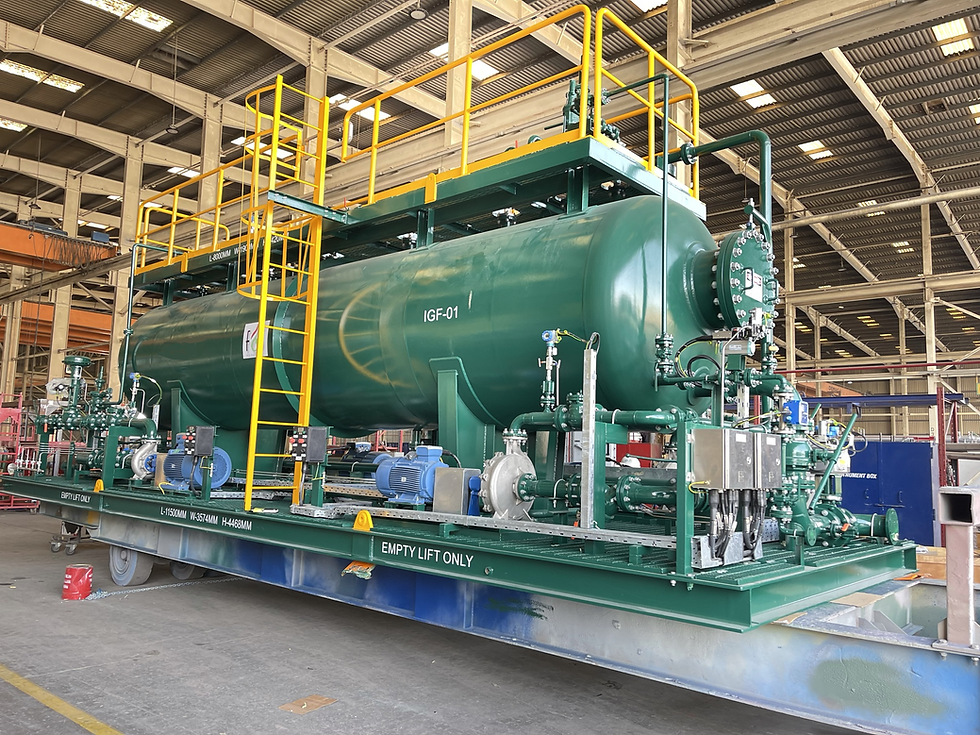
A degasser, nutshell filter, deoxygenation unit or specialised polishing stage may be justified by the duty. The proposal should state the inlet and outlet basis for every unit and show how off-spec water is diverted or recirculated.
Injection pumps and hydraulic interfaces
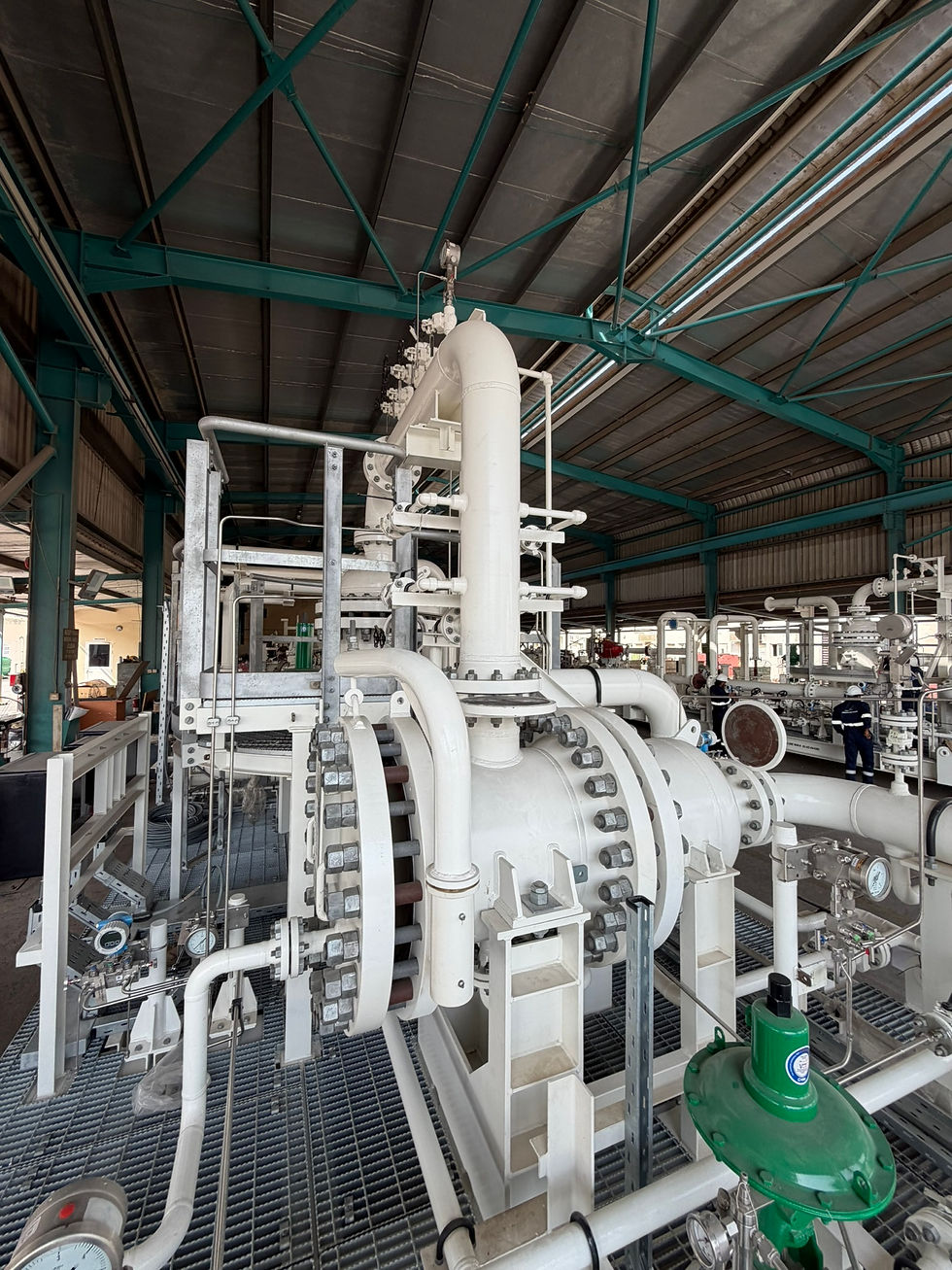
Injection pumping is not independent of treatment. The design must consider suction pressure, available net positive suction head, filter pressure loss, minimum flow, recycle heating, discharge pressure, wellhead control and transient operation. Pump metallurgy and seals should match the treated water and chemicals.
The hydraulic profile should cover clean and fouled filter conditions, one-train-out operation and future injection pressure. Control valves and recycle arrangements must not force the treatment equipment outside its stable range.
Monitoring and protective controls
Useful measurements include flow, pressure, differential pressure, turbidity or particle response, oil in water, oxygen, chemical flow and microbiological indicators where relevant. Online instruments need representative sampling, conditioning, cleaning and verification against laboratory methods.
The control philosophy should define the response to high differential pressure, off-spec quality, chemical failure, analyser fault and pump trip. Protection may include automatic diversion, shutdown or controlled recycle, depending on available storage and the consequences of injecting poor-quality water.
Demonstrating performance
Acceptance should cover hydraulic capacity, equipment functionality and treated-water quality. The test period should be long enough to include filter cycles and representative feed variation. The agreement should state how feed outside the guaranteed envelope will be treated.
Long-term performance depends on operating discipline. Trend injection pressure, rate, filter loading, chemical consumption and water quality together. A gradual loss of injectivity can begin before any single limit is exceeded.
Injection rate and pressure profile
Formation-damage criteria
Oil, solids and particle-size limits
Water compatibility and scale study
Oxygen and bacteria targets
Chemical programme
Backwash and reject handling
Performance test method
Proof to add before publication
Add an injection-quality table, process-flow diagram and confirmed pump and interface requirements. Use project-specific limits rather than generic reinjection numbers.
Crescent Engineering can review a produced water reinjection duty and develop an integrated treatment and pumping package. Request a reinjection system review with the water analysis, injection target, well data and available pressure profile.
References
US Department of Energy, National Energy Technology Laboratory, produced-water management resources.
Related Crescent articles
Continue exploring this topic:
Produced Water Treatment System Design: The Information Suppliers Need
Packaged Produced Water Treatment Systems: Scope, Equipment and Design Inputs
Skid-Mounted Produced Water Treatment Systems for Offshore and Onshore Projects
Offshore Produced Water Treatment Packages: Footprint, Weight and Maintainability

Comments